
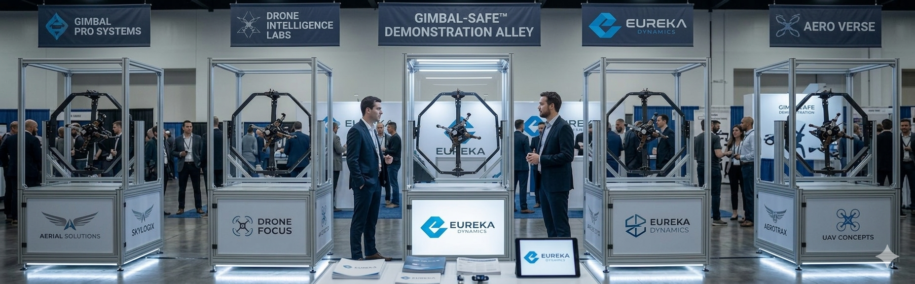
(And Why Most Companies Are Still Doing It Wrong)
Introduction
The drone industry is growing at an extraordinary pace. The global unmanned aircraft systems (UAS) market is projected to expand from USD 52.65 billion in 2026 to nearly USD 209.91 billion by 2035, driven by adoption across defense, logistics, agriculture, infrastructure, and public safety. With that growth comes an explosion of drone expos, conferences, and technology showcases around the world. These events are no longer just exhibitions. They are where partnerships are formed, investments are made, and reputations are built. And at the center of these events lies one of the most powerful and risky moments in the entire lifecycle of a drone product: The live demonstration.
What most companies don’t fully realize is this: A live demo is not just a showcase. It is a high-risk engineering event happening in front of your customers.
The Hidden Risk Behind Every Drone Demo
Drone demonstrations are designed to impress. A drone in motion captures attention far more effectively than a static display. But flying drones in densely populated exhibition halls or semi-enclosed spaces introduces operational risks that most teams underestimate. The reality is simple: most drone demos are unsafe by design, not by intention.
Key risks include:
- Drones are inherently unstable systems, with most crashes happening early in flight and up to 78% caused by human error
- A single crash can cause equipment damage worth hundreds to thousands of dollars, property damage averaging $4,500, and reputational harm that cannot be quantified
- In more severe cases, incidents have led to infrastructure damage, fires, electrical failures, and legal liability
The Problem: Demo Conditions Are the Worst Testing Environment
While drone demonstrations create excitement and attract attention, they also introduce operational risks that require careful management. Flying drones in densely populated exhibition halls or semi-enclosed spaces presents different challenges compared with open-field testing environments. These environments bring together limited space, high-density human presence, significant time pressure, and unpredictable conditions, all while operating with no margin for failure.
This creates a dangerous situation where:
- Debugging occurs under pressure, with limited time to diagnose or resolve issues
- Failures play out in front of customers and stakeholders, directly impacting perception
- Unverified performance is exposed in the most high-stakes setting
In any mature engineering discipline, deploying systems under these conditions without prior validation would be unacceptable. However, within the drone industry, this approach has become increasingly normalized, amplifying both operational risk and potential consequences.
A Real Cost Few Talk About
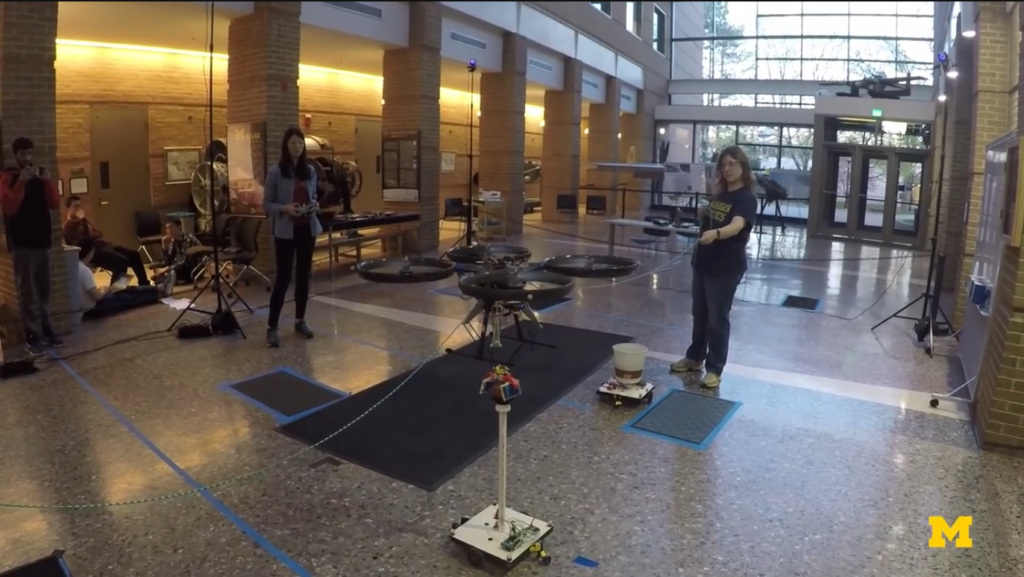
Incidents in the broader aviation and advanced air mobility sector illustrate the importance of proper safety measures. On September 2025, two electric vertical take-off and landing (eVTOL) vehicles collided during a rehearsal for an airshow in Changchun, China. The aircraft collided due to insufficient spacing which resulted in structural damage and a fire after landing. While this event occurred in a different context, it highlights how even advanced aerial systems require careful planning, coordination, and safety controls during demonstrations.
The true cost of a failed demo is not limited to the crash itself; it extends into broader business impact. It can result in lost credibility with customers and stakeholders, missed partnership opportunities at critical moments of engagement, reduced investor confidence in both product readiness and execution capability, and ultimately delayed product adoption due to perceived risk or immaturity.
In extreme cases, a single failed demo can shape how a company is perceived in the market.
Because at an expo, the demonstration is not just about the drone, it is a direct reflection of the company’s engineering rigor, validation processes, and operational discipline.
A Safer Approach: Controlled Demonstration Environments
The question is not whether drone demonstrations should occur. They should. The question is: how can they be done safely? The solution is not better pilots, additional caution, or last-minute testing, it is to change the environment itself.
Instead of flying drones freely in uncontrolled settings, a new approach is emerging: controlled dynamic testing platforms. These platforms provide a secure, structured framework for conducting demonstrations, enabling companies to perform even first-flight tests in a controlled and efficient manner. By supporting operations in both open and enclosed spaces, they significantly reduce risk while still allowing safe, real-time interaction with audiences.
Introducing a New Category: Drone Testing Infrastructure
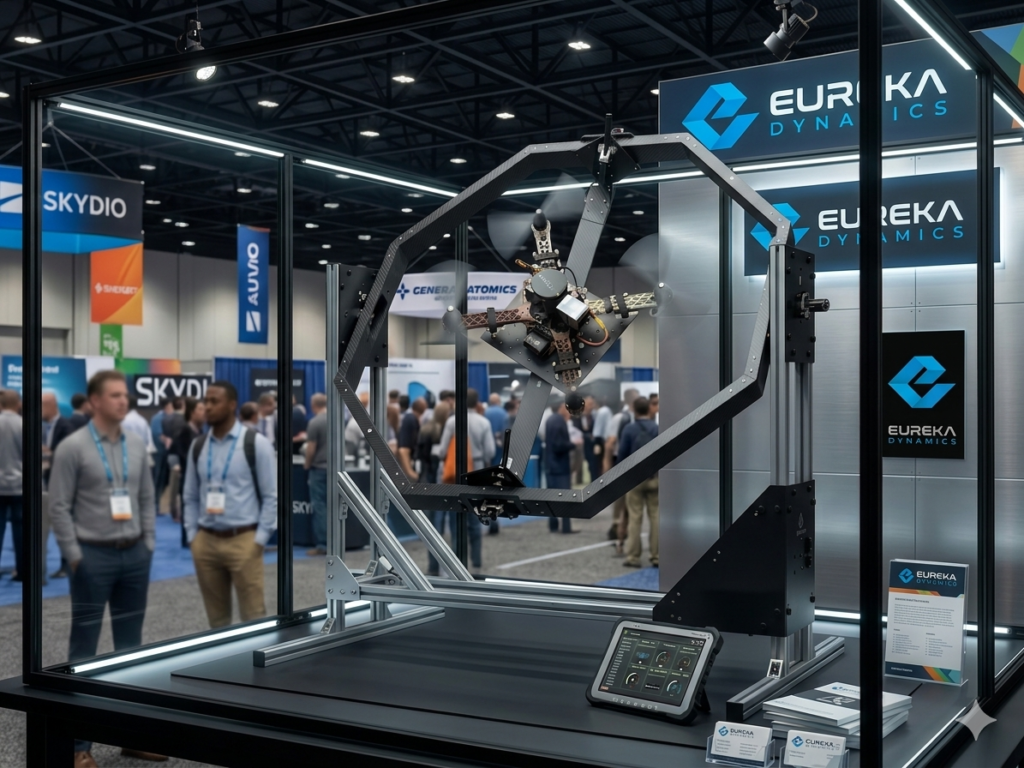
Eureka Dynamics addresses this challenge with its FFT GYRO system, a specialized gyroscopic platform that allows drones to move freely along roll, pitch, and yaw axes while remaining safely contained. The system supports a wide range of multi-rotor drones and enables controlled testing and demonstrations in exhibition environments.
For companies presenting new products, this type of demonstration platform creates an engaging visual experience while maintaining safety and operational control. A well-executed drone demo captures attention and allows audiences to experience the technology in action. Seeing a drone in motion often generates far more interest than viewing static equipment on a display stand.
A controlled demonstration environment allows companies to present their products in a way that sparks curiosity and engages potential customers. Attendees gain a clearer understanding of how drones operate and how the technology can apply to real-world missions. Tools such as the FFT GYRO help companies create these experiences safely while maintaining professional standards during exhibitions.
This changes everything because now a demo is no longer a risk, a crash is no longer catastrophic, and testing and demonstration become the same process.
Why This Matters at Expos
Using a controlled platform for demos creates a completely different experience and delivers several key advantages for exhibitors:
- Safety Without Compromise: Protects teams and attendees from accidents during live demonstrations.
- Equipment Protection: Prevents damage to expensive equipment caused by collisions or malfunctions.
- Reliable Demonstrations: You are no longer hoping the drone works. You are showing that it works.
- Faster Setup and Execution: Enables quick setup, installation, and operation with minimal preparation time.
There is a simple idea that separates high-performing engineering teams from the rest: A live demo should never be the first time a system proves it works. Yet in the drone industry, this happens constantly. Controlled testing platforms eliminate that risk entirely.
Proof at Scale: Engineering Beyond the Catalog
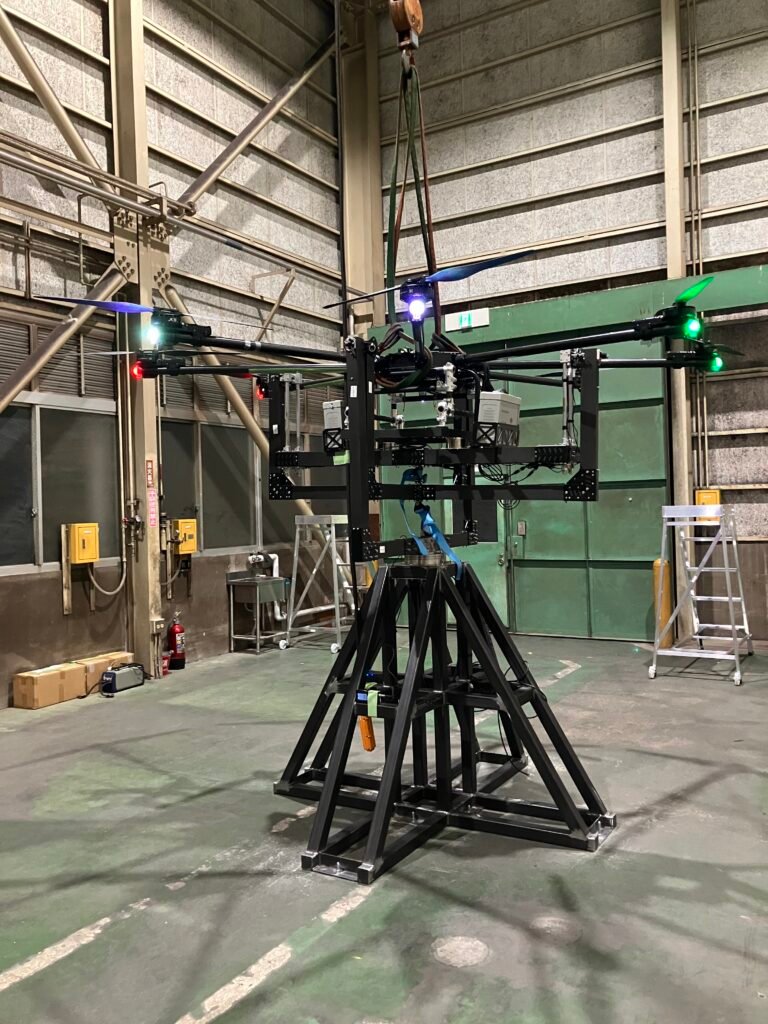
In a recent project, Eureka Dynamics designed, simulated, manufactured, and deployed the largest drone testing platform in the world in just four months.
The system was built for a drone with:
- 5-meter outer diameter
- 100 kg weight
- 170 kgf maximum thrust
Despite the scale and complexity, the platform passed all structural and dynamic tests and transitioned from prototype to final product. This was only possible due to a deeply parametrized and modular engineering approach. It demonstrates a key point: Eureka Dynamics does not just build products. It engineers solutions at any scale required.
Looking Ahead
As the drone industry continues to grow, expectations will change. Safety will not be optional. Reliability will not be assumed. Demonstrations will not tolerate failure. Events like XPONENTIAL are becoming global stages where companies prove not just innovation, but engineering maturity. It stands as one of the premier global gatherings for leaders and end-users in the uncrewed systems and robotics industry.
And in that context, one thing becomes clear: the future of drone demos is not risk management. It is risk elimination.
Experience It Firsthand
Eureka Dynamics will be present at XPONENTIAL 2026 (May 11–14, Detroit, MI), showcasing how controlled testing platforms are transforming live drone demonstrations.
Beyond the exhibition floor, the FFT GYRO also extends its value well past event season. Companies use the platform for research and development, pilot training, system calibration, and a range of additional applications making it a long-term asset for any drone technology team.
Because the goal is not just to build better drones. It is to enable an industry where innovation is no longer limited by risk.
Written by Akshata, Founder of Dronescript
Leave a Reply
You must be logged in to post a comment.